
The moment the product is for.
Picture the founder we built Roadmap for. It is 11:47 PM on a Friday. She runs a Series B company. A counterparty has sent back the MSA with uncapped indemnity for IP claims. The deal is supposed to close Tuesday. She told her board it would. Her outside firm — the one on the retainer that never seems to cover the thing she actually needs — bills by the hour and does not answer Slack on Friday nights. The partner who will eventually call her back Monday is not going to get her to signature before the weekend eats the question.
She does not need a memo on the common law of indemnification. She needs to know, before she closes her laptop, whether the clause is survivable or a dealbreaker — in language her head of sales can paste into a reply by Monday morning.
So she pulls up the Slack Connect channel her company shares with Roadmap and asks the question there.
Ava answers in ninety seconds. The answer is grounded in your playbook, directed by an attorney, and reviewed before it lands as advice. Monday morning, the counter goes out. The deal closes Thursday.
That sequence is not a demo. It is the architecture.
What we built, and why.
Roadmap exists because the legal cost that runs through a growing company is mostly overhead the company is paying for and getting almost nothing back from. The retainer covers what the firm wants to staff, not what the founder actually needs. The billable hour rewards length and friction, not the answer. The work that should be routine — vendor reviews, employee paperwork, the third turn of the same template — is the work that quietly burns the most money on the invoice. Founders deserve a different shape.
So we launched Roadmap as a law firm built as a product. Routine work in your practice area is included in a monthly subscription. Non-routine work is scoped alongside, in writing, before it starts. Every output is reviewed by an attorney, every conversation runs through a dedicated Slack Connect channel, and every artifact ties back to a real engagement governed by the New York Rules of Professional Conduct.
Most of what the market calls "AI for law" is a chatbot bolted onto the same billable-hour firm that built it. The firm wins either way, because the clock still runs. Roadmap is built the other way around: privilege, review, and billing all live inside the product, and the firm is the product.
Three features make that real.
1. Automated Contracting — routine work in the subscription, every time.
The entry point is a slash command. Type /contract in your Roadmap Slack channel, drop the file, pick a deadline, send. The AI agent converts the document, loads your playbook, and marks it up in Google Docs — comments, suggested redlines, risk flags. A licensed attorney opens a Doc that is already seventy percent reviewed, finishes the work, and flips the status to Client Review. Ava pings you. The clean document is waiting.
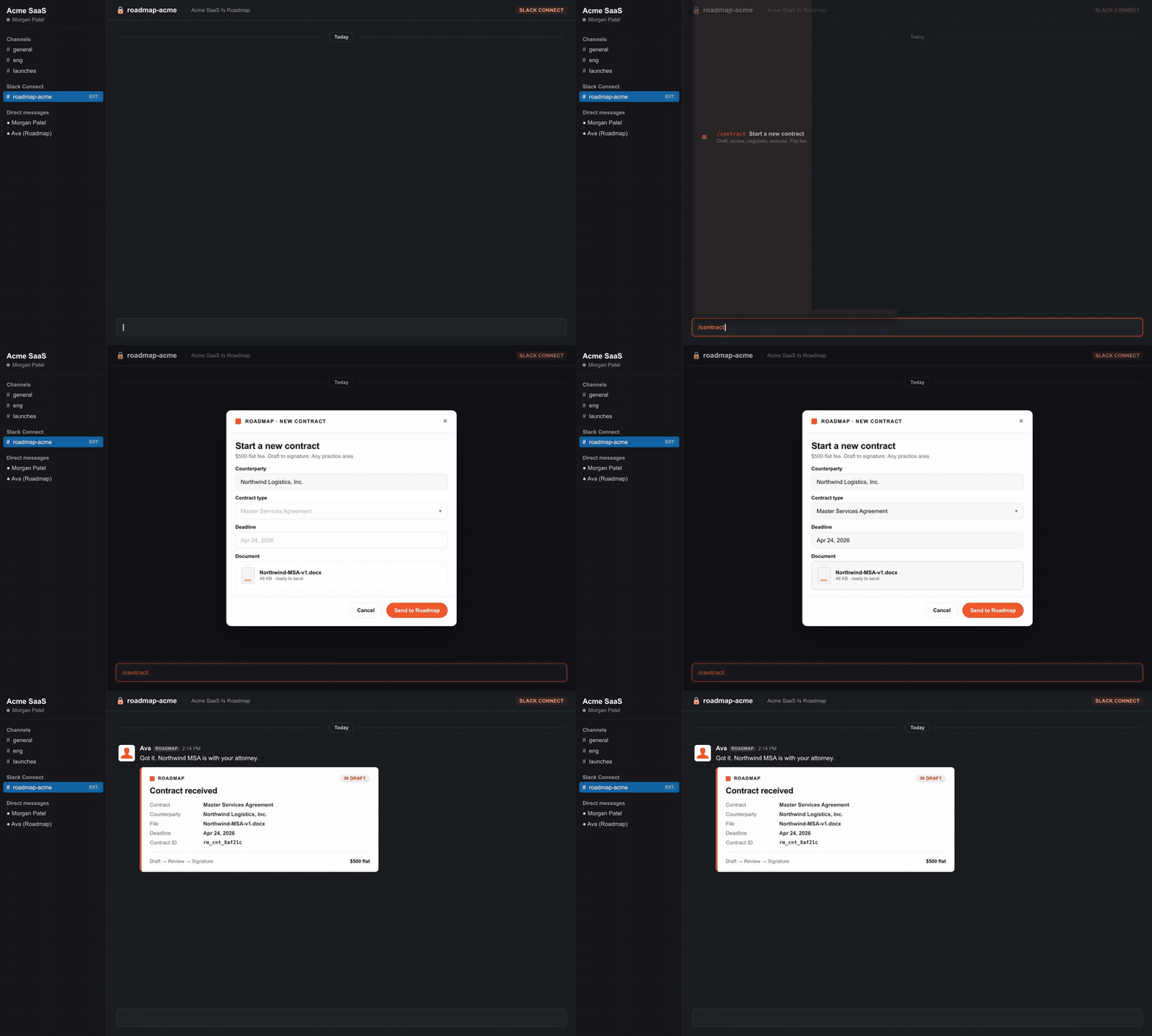
/contract in Slack, the modal captures counterparty and deadline, and Ava posts the matter record back to the thread. Draft to signature, attorney-reviewed, included.The subscription covers the routine work in your practice area — the documents you run every month, the second and third turns, the redlines you should not have to budget for in advance. Anything outside that — a financing, an M&A diligence sprint, a litigation matter — is flagged at intake and referred out to a specialist; we don't run financings or litigation. The line between "included" and "scoped" is drawn explicitly, in writing, before work starts. No block-billing surprises, no "we'll need to open a new matter for the second turn," no partner time quietly inflating because an associate escalated.
Big firms charge by the clock and pass the AI-efficiency savings to their partnership, not their clients; their rates have climbed eight to sixteen percent a year while the hours-per-document have quietly fallen. ALSPs are cheaper per hour, but they still sell hours. Roadmap sells the outcome. That model does something no hourly firm can offer a founder: it makes legal a line item you can actually plan. You know the cost before you send the document — because it is the same number you knew last month. Burn is forecastable. The board deck stops carrying a mystery entry called "legal — pending."
2. Ava — a Slack-native legal agent where the work already happens.
Ava is not a chatbot. She lives in the Slack Connect channel that anchors your engagement with Roadmap, reads it continuously, and answers questions in the thread where they are asked. A vendor clause at midnight. A plain-English read on a notice deadline. The 409A question your CFO meant to ask six weeks ago. She answers.
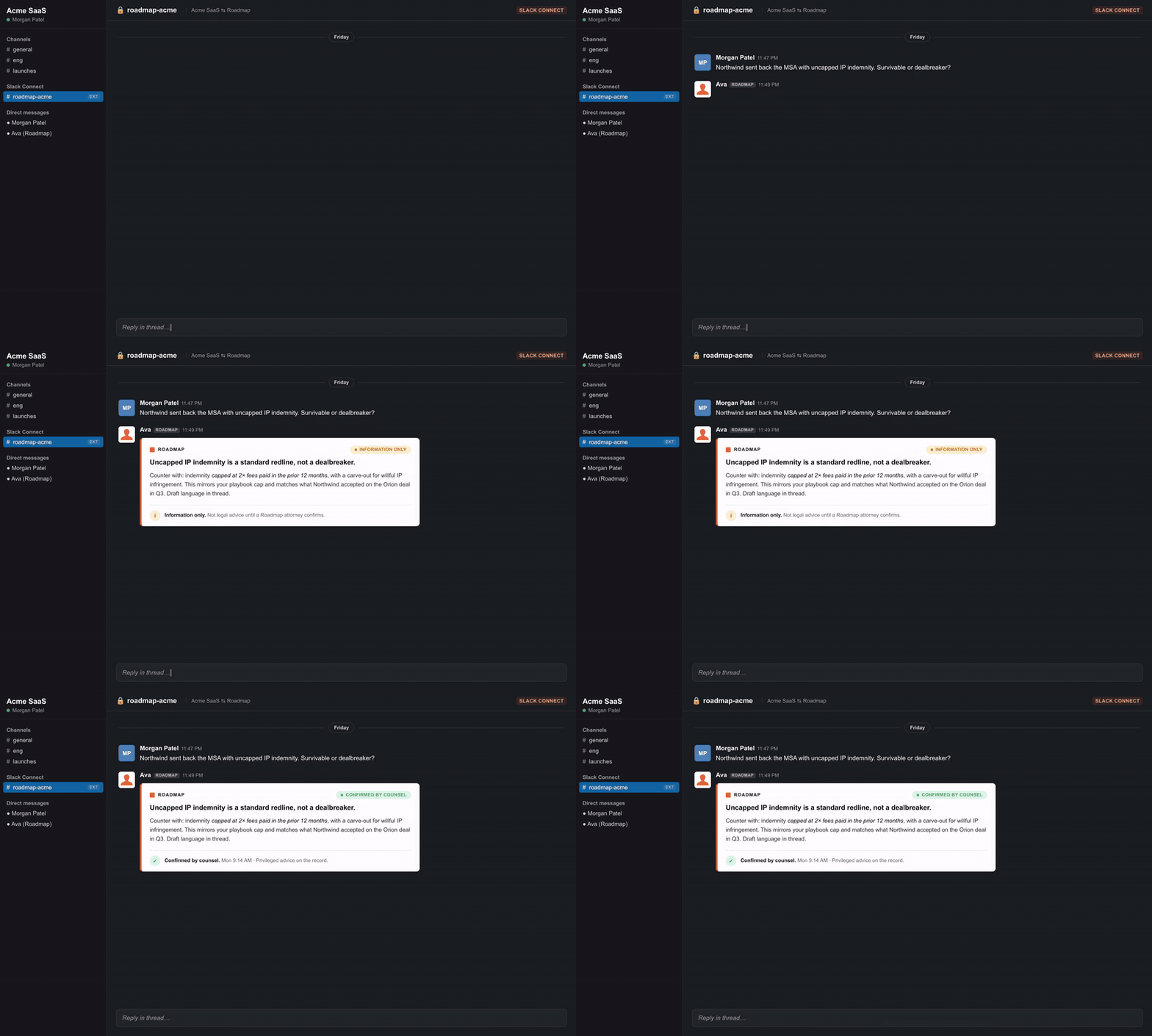
Ava is attorney supervised, directed, and reviewed. She runs as an agent of the firm — her playbook is set by your Roadmap attorney, her tasks are scoped by your Roadmap attorney, and her outputs are reviewed by your Roadmap attorney. No serious firm would let a junior associate post an unsupervised memo in a client channel. The AI version is held to the same standard.
One detail that matters operationally: each engagement gets its own channel. Counsel and Operator are not bundled into one room — they run alongside each other when you take both, on their own channels, with their own intake. We add as much routine work as possible into the subscription on either side, and we keep the engagements clean so the privilege story stays simple. For a founder, the practical shape is this: the questions your team is already asking each other — in DMs, in standups, in the margins of Notion docs — are now in one channel, logged, answered, and flowing through a real engagement. Nothing lives in a private ChatGPT tab. The surface area of legal risk shrinks because the legal conversation is all in one room, and the room is yours.
3. Shield — attorney–client privilege, baked into the stack.
Most legal AI tools ask you to trust a disclaimer: we'll preserve privilege if everyone behaves correctly. That is not how privilege works. Privilege is a structural property of a communication — who said what, to whom, in what capacity, inside what engagement — and it is either there or it is not. Shield is the infrastructure underneath Roadmap that makes it there.
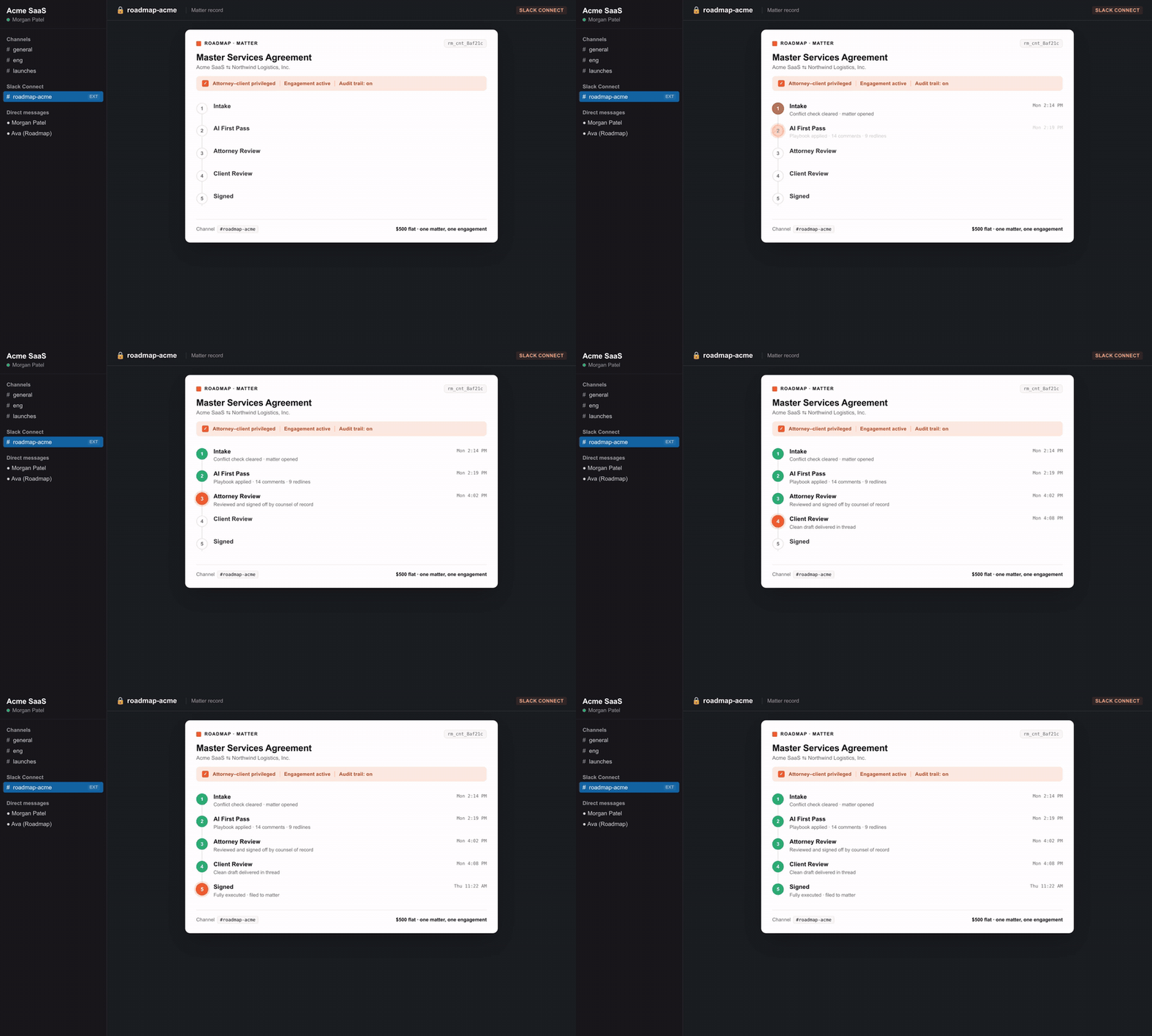
Every client gets a dedicated Slack Connect channel, provisioned after conflict check clears, with an attorney of record named on the engagement. Every contract, version, comment, and agent output ties back to a Notion matter record. The AI runs as an agent of the firm, supervised by an attorney, on firm infrastructure — the same doctrine that has let non-lawyer experts sit inside the privilege umbrella for decades, applied to a world where one of those experts is an AI agent and the lawyer is the one directing it. The cheap version of privilege is the one built before you need it. The expensive version is the one retrofitted the week the deposition lands. Every legal AI tool sold as a SaaS add-on is the second kind. Roadmap is the first.
If you have ever sat through diligence and watched an acquirer's associate ask for the privilege log, you know which version you want.
How the plans fit.
Three plans, one architecture. Roadmap Counsel at $4k/mo is the law firm — fractional general counsel from day one, your dedicated Slack channel, routine work in your practice area included. Roadmap Operator at $4k/mo is the advisory side — fractional senior producers across the functions next to legal: engineering, media, accounting, operations. Same shape, same Slack discipline, separate channel, separate intake. Roadmap Personal at $1k/mo is for the founder and their family — the will, the trust, the immigration matter, the side question that does not belong in the company channel. Take one, take two, take all three. Annual prepay is fifteen percent off and still billed monthly so cash flow does not move.
And when you are ready for someone in-house, Roadmap Recruit places a Roadmap-certified attorney or GC on your team for a referral fee. Coming soon.
The counter, briefly.
The counter runs like this: a disclaimer-gated chatbot is faster and cheaper, so why pay for attorney review? Because speed without privilege is a liability, not a feature. Free legal output from a system that collapses the moment opposing counsel asks for the privilege log is worth precisely nothing the day you need it to be worth something. The Big Law answer is go slower and cost more. The vendor-AI answer is go faster and risk everything. Roadmap's answer is go faster, on the record, inside a real firm. Three answers, one correct.
The close.
One subscription per engagement. Routine work in your practice area, included. Attorney on every output. Slack-native because that is where the work lives, privilege baked in because that is how it survives diligence. The billable hour was designed in 1962, for a world where drafting an MSA took forty hours. The MSA now takes ninety minutes. The firms that cling to the clock are charging 2026 rates for 1962 work.
The law must change with technology — not in opposition to it. Roadmap is what that change looks like.
Try Roadmap at useroadmap.co.